PHA Filament: The Promising, Yet Tricky, Bio-Material for Makers
PHA filament presents a promising, yet tricky, bio-material for makers. Many view it as a next-generation sustainable option for 3D printing. Its environmental promise excites. Is PHA too good to be true? Our analysis of maker discussions separates hype from reality, offering practical truths.
PHA (Polyhydroxyalkanoates) offers genuine sustainability benefits. The material biodegrades remarkably well, a key advantage over traditional plastics. Yet, makers frequently encounter unique printing challenges with PHA. Its distinct properties demand specific approaches. We've dived deep into maker forums for a community-driven perspective on these hurdles.
Understanding real-world use is vital for new materials like PHA. Theoretical promise often meets practical hurdles. Maker conversations reveal these unspoken truths daily. This resource delivers those practical, community-vetted insights on PHA. We help you navigate its true potential responsibly.
PHA's Biodegradability: The Real Story Compared to PLA (Community Insights)
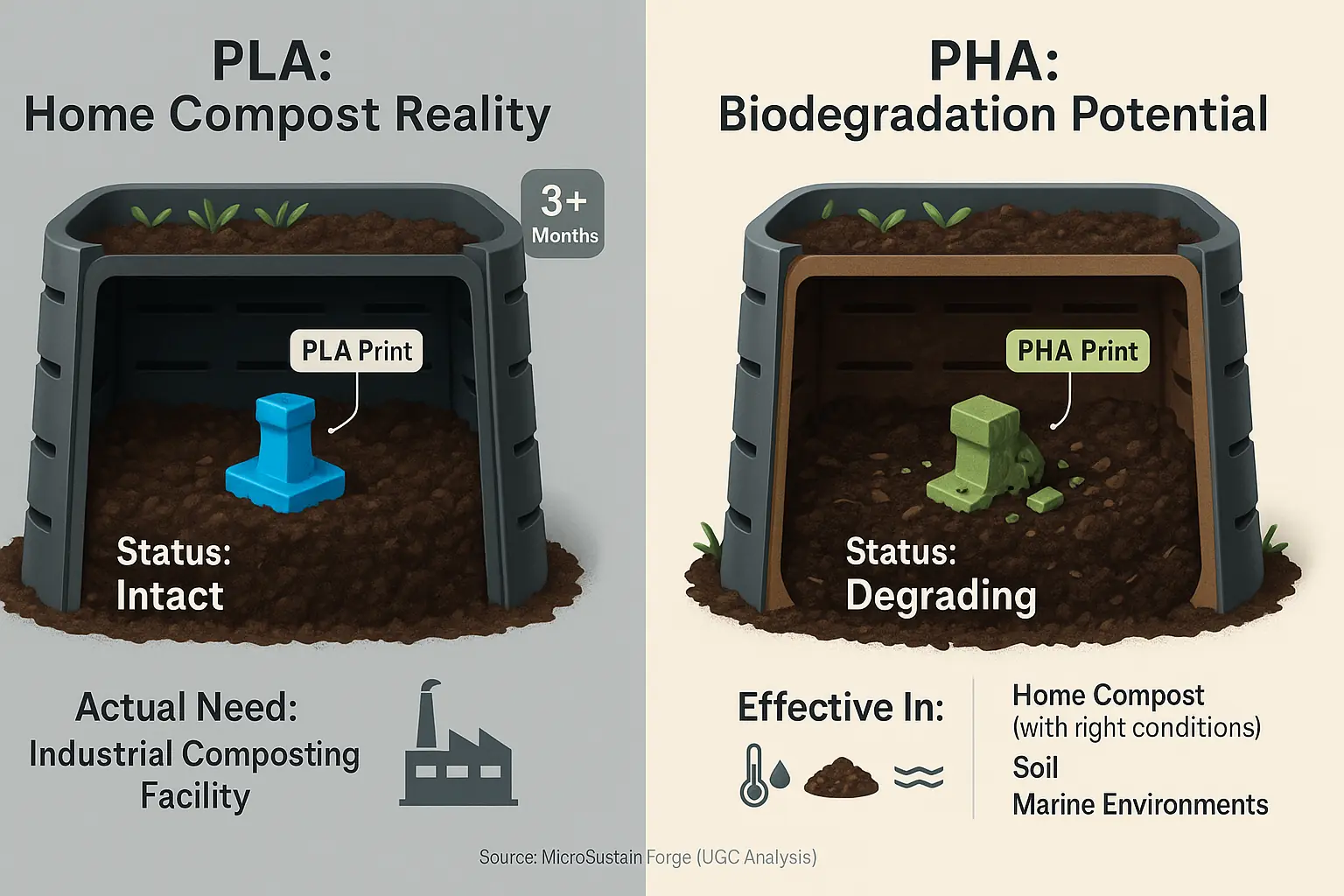
PLA filament demands industrial composting facilities. Many makers, eager for eco-friendly solutions, learn this the hard way. They toss failed PLA prints into the home compost. Months later, those prints remain stubbornly intact. PHA changes this narrative. Microorganisms naturally produce PHA polymers. These polymers can biodegrade in more diverse environments, unlike PLA. Soil and marine settings are key examples.
Our deep dive into scientific literature and user discussions reveals important truths. PHA’s biodegradability genuinely outshines PLA. It is not a magic bullet, however. Specific conditions profoundly influence PHA's degradation. Temperature, moisture, and microbial activity in your compost are the big three. User experiences with home-composted PHA therefore differ. Some report success; others, slower breakdown. The term "biodegradable" lacks simple, universal application.
PHA shows genuine promise reducing plastic accumulation. This particularly addresses microplastic pollution. A huge concern. Unlike traditional plastics, which shed persistent fragments, PHA offers a different outcome. Properly managed PHA can break down more completely in appropriate environments. This positions PHA as a truly compelling material for eco-conscious makers. Correct end-of-life handling unlocks this potential.
Navigating PHA Printing Challenges: Temperature Sensitivity, Stringing & More (Maker Solutions)
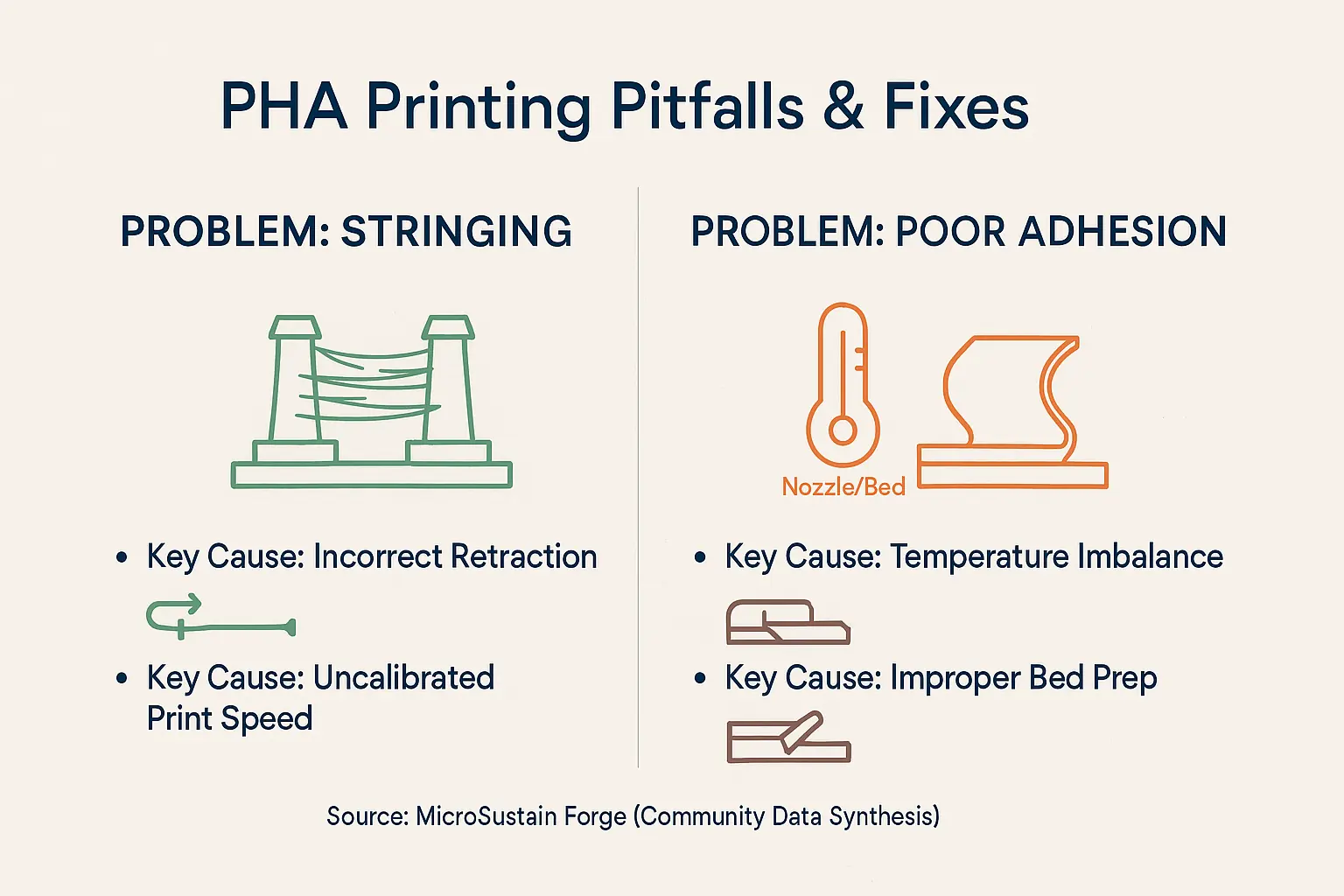
PHA offers exciting eco-benefits. Printing it successfully, however, presents unique hurdles. Ever felt like you're playing a guessing game with your printer settings, especially with new filaments? Our analysis of maker discussions reveals PHA often behaves this way. Temperature sensitivity is a primary culprit, demanding precise nozzle and bed temperatures. This sensitivity frequently causes issues like stringing, clogging, or poor layer adhesion if not perfectly dialed in.
Stringing remains a persistent challenge for many PHA users. Makers constantly troubleshoot this. Our synthesis of countless forum threads points to meticulous retraction setting calibration. Print speed adjustments also prove vital for taming PHA's tendencies. One maker shared how a tiny tweak to retraction distance, combined with a slightly lower print speed, effectively eliminated their stubborn PHA stringing. Sometimes, these counter-intuitive tweaks unlock success.
Good first-layer adhesion can also prove elusive with PHA. Poor layer bonding further tests a maker's resolve. The community, through shared trial-and-error, has developed effective strategies. Makers frequently discuss specific bed preparation techniques. They also highlight crucial slicer adjustments for achieving strong, reliable prints. Patience and systematic experimentation are key to mastering PHA printing challenges.
PHA's Mechanical Properties: Flexibility, Strength & Real-World Performance (User Insights)
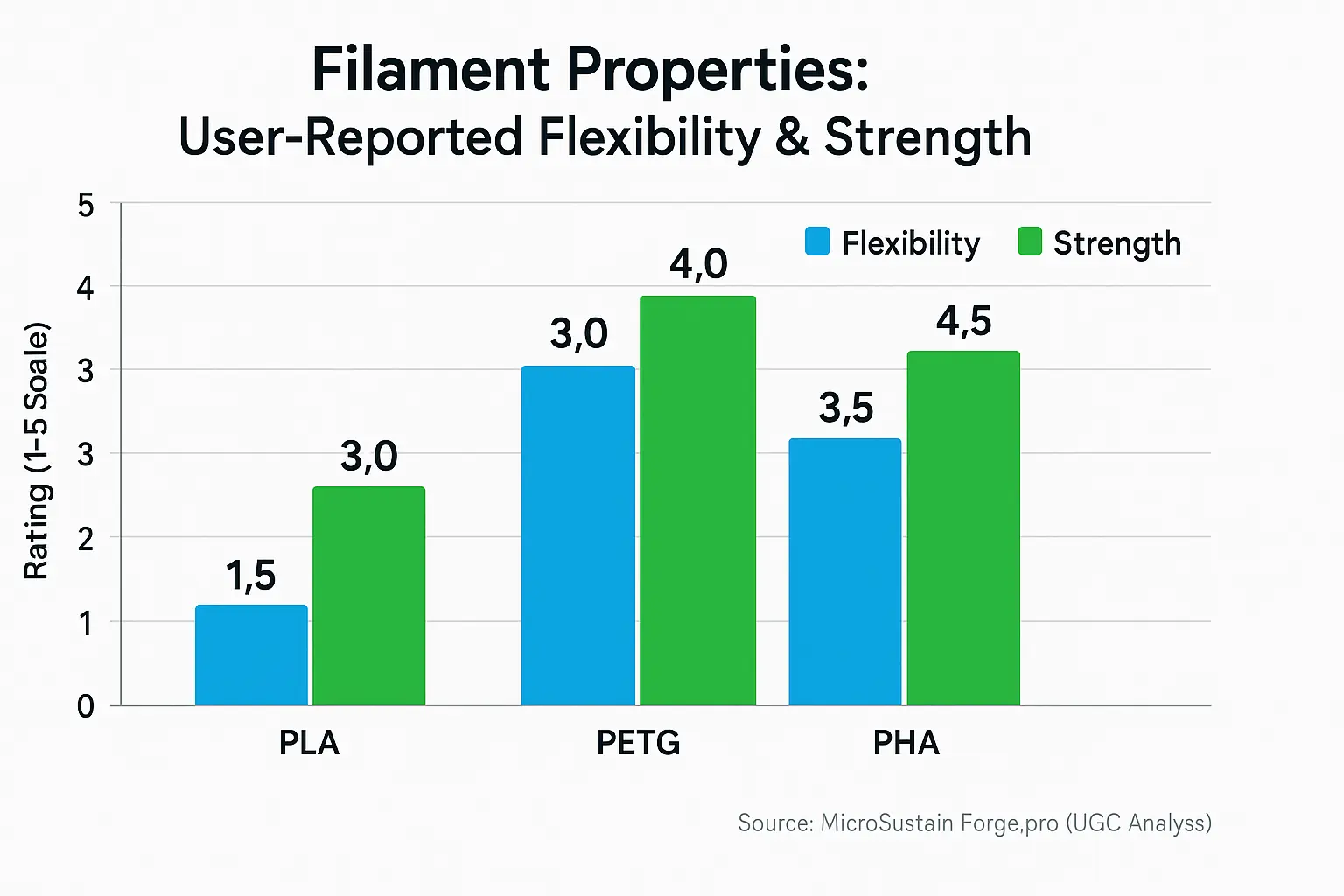
PHA mechanical properties offer a unique balance. Users consistently report its notable flexibility. Unlike the often-brittle PLA, PHA provides a surprising amount of give. This elasticity opens up exciting project possibilities for makers. Parts needing some resilience, not rigidity, often find PHA ideal.
PHA's strength and impact resistance present more complex user observations. These qualities can vary significantly. It depends on the specific brand and formulation. One common maker experience involves printing a functional hinge; it flexed beautifully with PHA. However, some PHA brands felt surprisingly fragile, cracking under sudden impact. This real-world feedback highlights the importance of brand-specific research. A spec sheet number rarely tells the whole story.
Makers can best leverage PHA's mechanical traits with careful consideration. First, assess your functional part's specific demands. Does it require substantial durability against knocks, or is slight elasticity the primary need? Community discussions and user reviews frequently detail brand-specific performance nuances. These collective insights prove invaluable for choosing the right PHA for reliable, functional prints.
PHA Filament: Cost, Availability & Real-World Maker Applications (Community Insights)
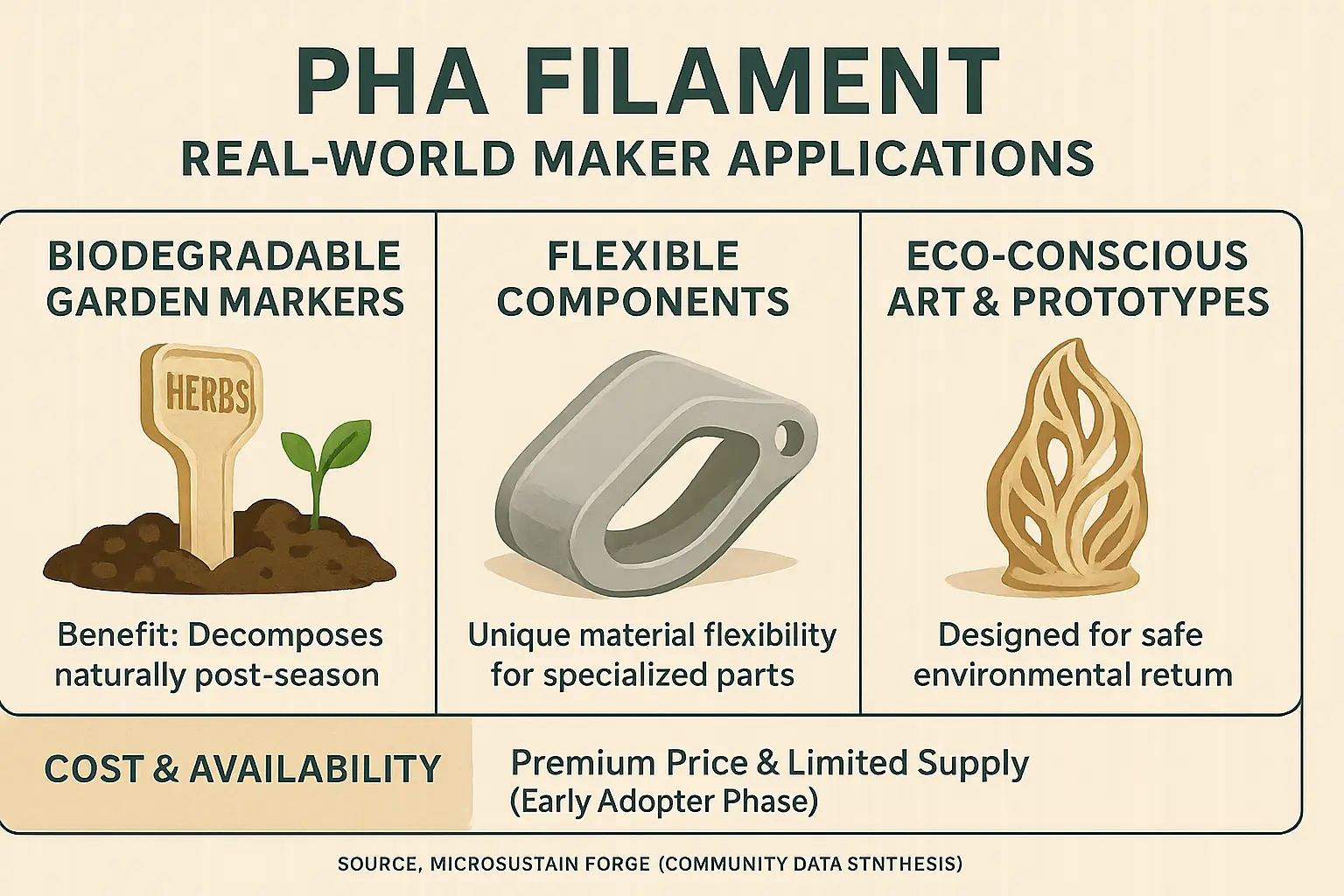
Let's be honest: PHA filament isn't replacing budget PLA spools soon. It often carries a premium price. Finding suppliers also requires more searching. This reflects PHA's newer market presence and its complex production. Makers currently navigate this 'early adopter' reality.
Yet, community discussions reveal many PHA successes. Makers cleverly leverage its distinct advantages. Fascinating projects emerge from these explorations. Imagine biodegradable garden markers. They naturally decompose after one season. Some makers craft flexible components for specialized tools. Others design intricate art, intended for safe environmental return. These pioneering efforts showcase PHA's value for projects needing true biodegradability or specific flexibility.
So, should you choose PHA? Makers weigh its environmental benefits carefully. They consider its unique material properties. These factors often justify the higher initial cost for specific applications. Growing demand should improve availability. Prices could also become more competitive. PHA remains a material with exciting potential for responsible making.
PHA Printing Challenge Quick Check: Diagnose Your Issues
Select the issues you're facing with your PHA prints, and we'll offer some community-vetted solutions:
Forging Ahead with PHA: Is This Eco-Filament Right for Your Next Project?
So, after diving deep into the world of PHA, you might be asking: Is this the future of eco-printing for your workshop? PHA filament represents a significant forward step. It offers genuinely biodegradable 3D printing material. Our collective findings show PHA provides superior environmental benefits over PLA in many maker contexts. Some printing challenges do exist.
PHA filament often requires careful print setting calibration. Its current cost can be a factor for makers. However, PHA's unique flexibility and impressive broader biodegradability make it ideal for specific, demanding applications. Mastering new eco-materials requires patience. This truth echoes throughout maker forums. The rewards, though, are substantial for the dedicated.
Ultimately, PHA suitability hinges on your project requirements. Your environmental priorities also shape this choice. A spirit of experimentation is key with this evolving material. We encourage makers: embrace PHA. Test its boundaries. Share your discoveries with the community. This adventurous approach forges real sustainable innovation.