Why Every Watt Counts: The Maker's Guide to Energy Efficiency
Your workshop electricity bill arrives. That pang is familiar. You ponder your making's environmental footprint. Every watt truly counts. This impacts your wallet. It directly affects the planet. Smarter making enhances creativity, not sacrifices it.
Makers often track material waste. This vigilance is good. Yet, energy consumption frequently gets overlooked. Tools, lighting, even idle equipment, become significant energy drains. Our deep dive into community discussions uncovers many 'aha!' moments. Makers pinpointed these surprising energy losses.
Imagine simple habit changes. They yield significant energy savings. Small adjustments, community-tested, make a real difference. We analyzed countless shared experiences. They reveal the most effective, often overlooked, workshop strategies. These are unspoken truths. The maker community's collective wisdom discovered them. Your workshop can become a lean, green, making machine.
Ready to slash those hidden energy costs? You can feel even better about your sustainable craft. Good. Let's explore the practical hacks. These are the strategies real makers consistently endorse.
Your Workshop Energy-Saving Habit Checker
Assess Your Workshop Energy Habits!
Discover quick wins to lower your electricity bills and carbon footprint. Select the habits that best describe your workshop practices:
1. How often do you unplug tools when not in use (phantom load)?
2. What kind of lighting do you primarily use in your workshop?
3. How do you maintain your cutting tools (saws, bits, blades)?
Your Energy Saving Insights:
Ready to pinpoint your biggest energy-saving opportunities? This quick habit checker, inspired by countless maker discussions, will give you personalized insights into where you can make the most impact, right in your own workshop. It functions as a quick energy audit. You receive actionable steps for immediate improvement.
Every small adjustment you make, from unplugging a charger to sharpening a blade, adds up. This isn't just about saving a few bucks; it's about forging a truly sustainable making practice. Keep exploring, keep optimizing, and keep sharing your wins with the community!
Power Tools: Smart Usage Hacks to Cut Down on Consumption
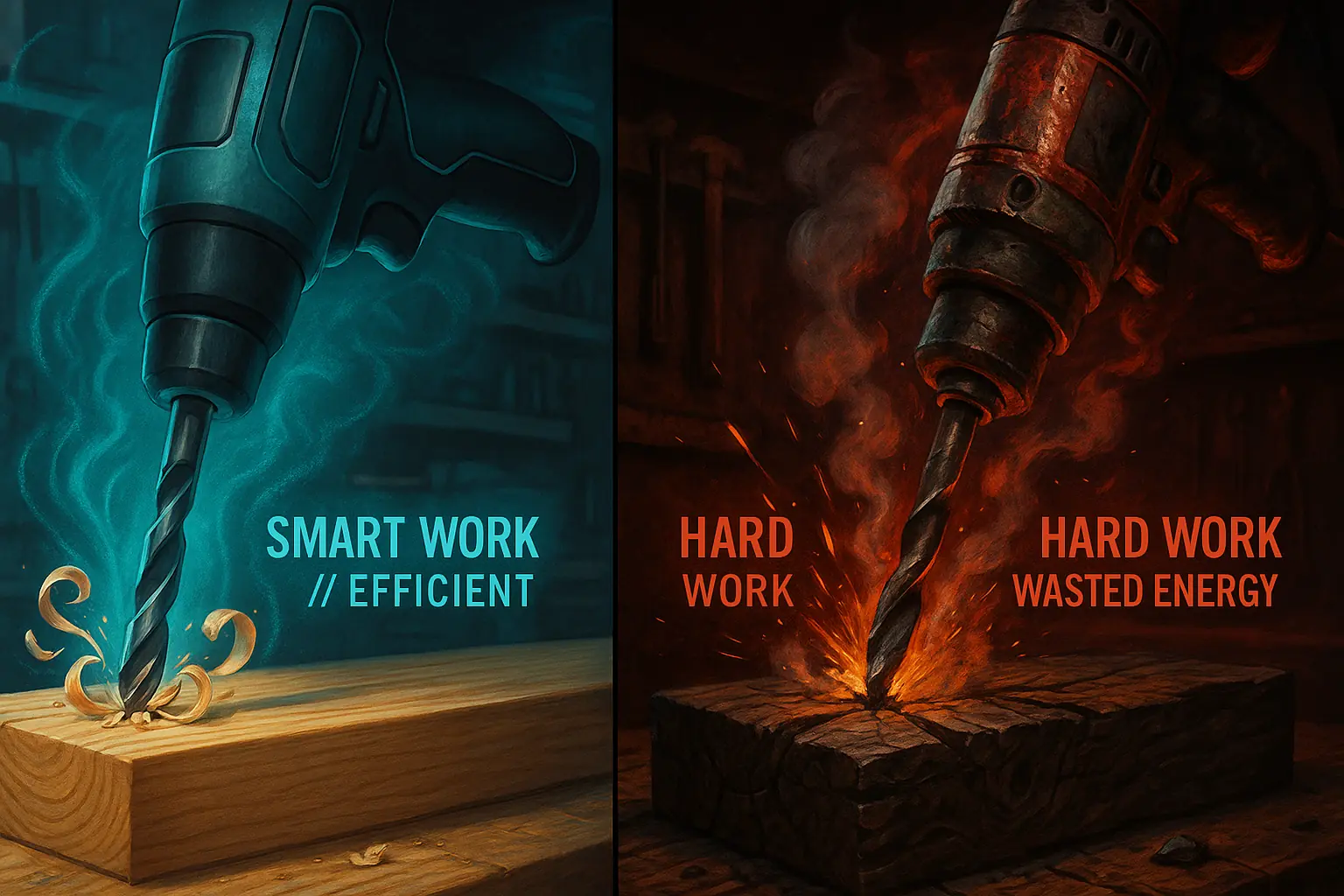
Your trusty power tools are workshop workhorses. They can also become silent energy guzzlers. Smart usage changes this equation. We've seen countless makers share their 'aha!' moments. They realized how simple habits wasted significant power. The goal? Work smarter, not just harder, for both your workshop and your tools' longevity.
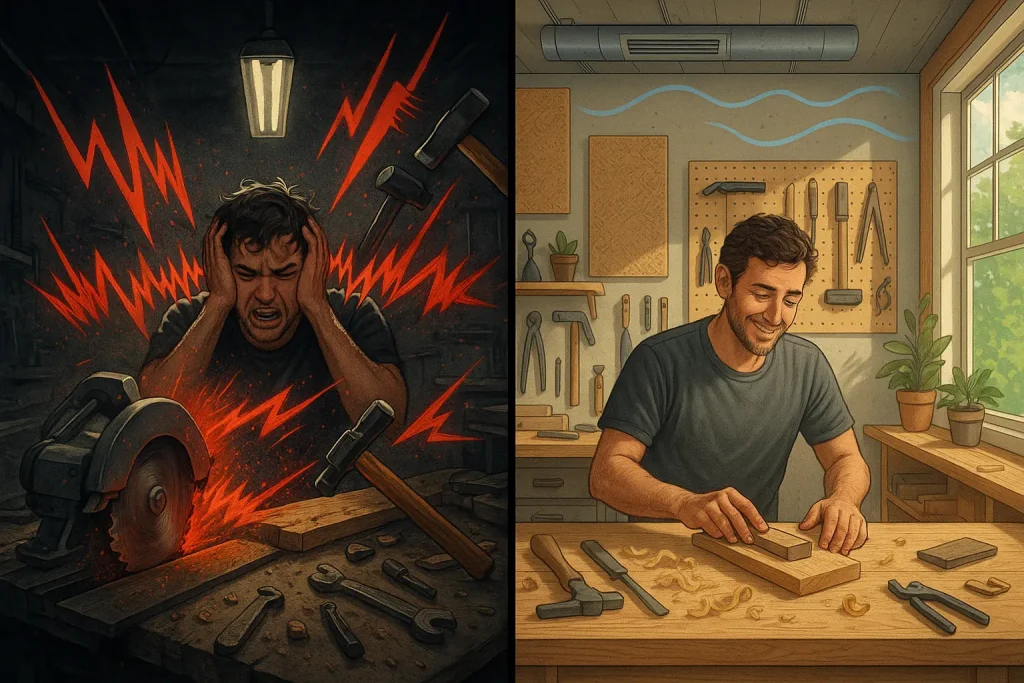
Here's an unspoken truth from many workshops: a dull saw blade or drill bit forces your motor to work exponentially harder. This isn't just about slower progress. It's about drawing more electricity. It also stresses your tool's components. Imagine pushing a dull knife through tough wood – your tool feels that same intense strain, demanding extra power to compensate. Makers who prioritize sharpening consistently report not only cleaner cuts but also noticeably lower energy consumption.
Another smart move? Batching your tasks. Instead of turning your router on and off for every single cut, plan your operations carefully. Run several similar tasks consecutively. This simple habit minimizes those energy-intensive start-up and cool-down cycles. This approach is a firm favorite among efficiency-minded makers, as shared in numerous community discussions.
Sometimes, the most energy-efficient tool is simply the one that fits the task perfectly. Using a massive router for a tiny chamfer? That's needless power draw. The right tool, efficiently used, is always the greener choice for your workshop. For more on choosing tools that last and perform efficiently, check out our guide on sustainable tool maintenance.
Shedding Light (Efficiently) & Staying Warm: Workshop Lighting & Heating Hacks
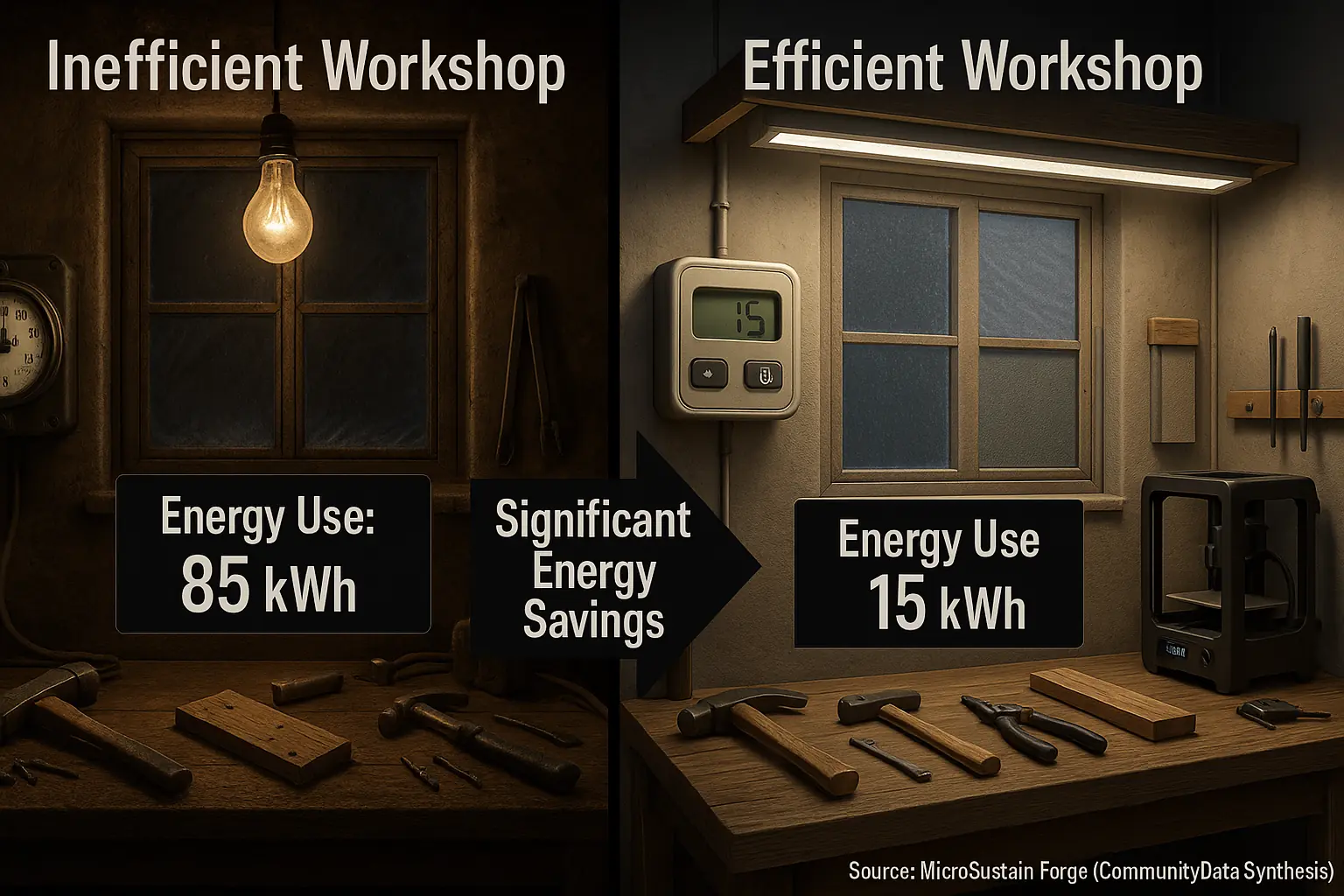
Beyond your power tools, workshops hide other energy drains. Lighting and heating are major culprits. Many makers overlook these consistent energy users. But here's the good news. Makers developed seriously clever ways to tackle these issues. These solutions often require minimal investment.
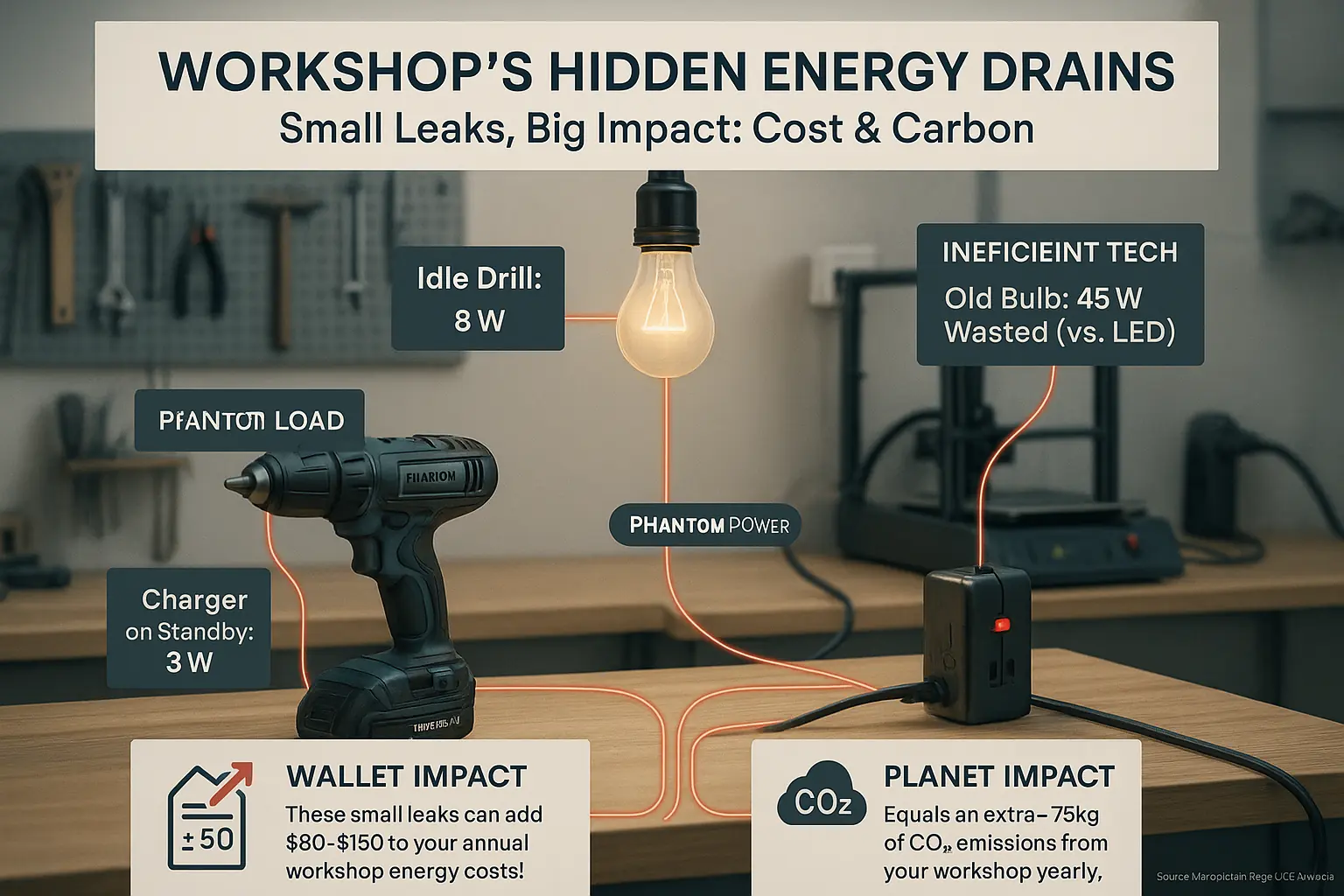
Old incandescent bulbs burn money. Inefficient fluorescents also waste resources. Switching to LEDs is a smart move. But here's a practical tip. Focus task lighting over general illumination. Many users discovered targeted LEDs save energy. Bright LEDs directly over your workbench or 3D printer provide better visibility. This method uses far less energy than flooding entire rooms with light.
Workshop comfort can strain your budget. Insulation becomes your best friend here. Community insights highlight its crucial role. Sealing drafts significantly boosts heating efficiency. Adding weatherstripping helps too. Even simple DIY window insulation makes a huge difference. These passive solutions offer sustainable workshop climate control.
Space heaters consume considerable power. Smart thermostats can optimize their use. Timers also prevent unnecessary operation. Heating an empty workshop is pure waste. Makers often share tips for pre-heating. They advise heating only when needed. Localized heating for just your workspace conserves energy effectively.
The Silent Sucker: Conquering Phantom Load in Your Workshop
Electricity silently slips from your workshop. Your tools seem 'off'. That's phantom load. Some makers call it 'vampire drain'. This sneaky energy thief surprises many makers. Its existence is often unknown. This invisible consumption definitely accumulates. Your energy bills reflect this waste. Your sustainability goals suffer too.
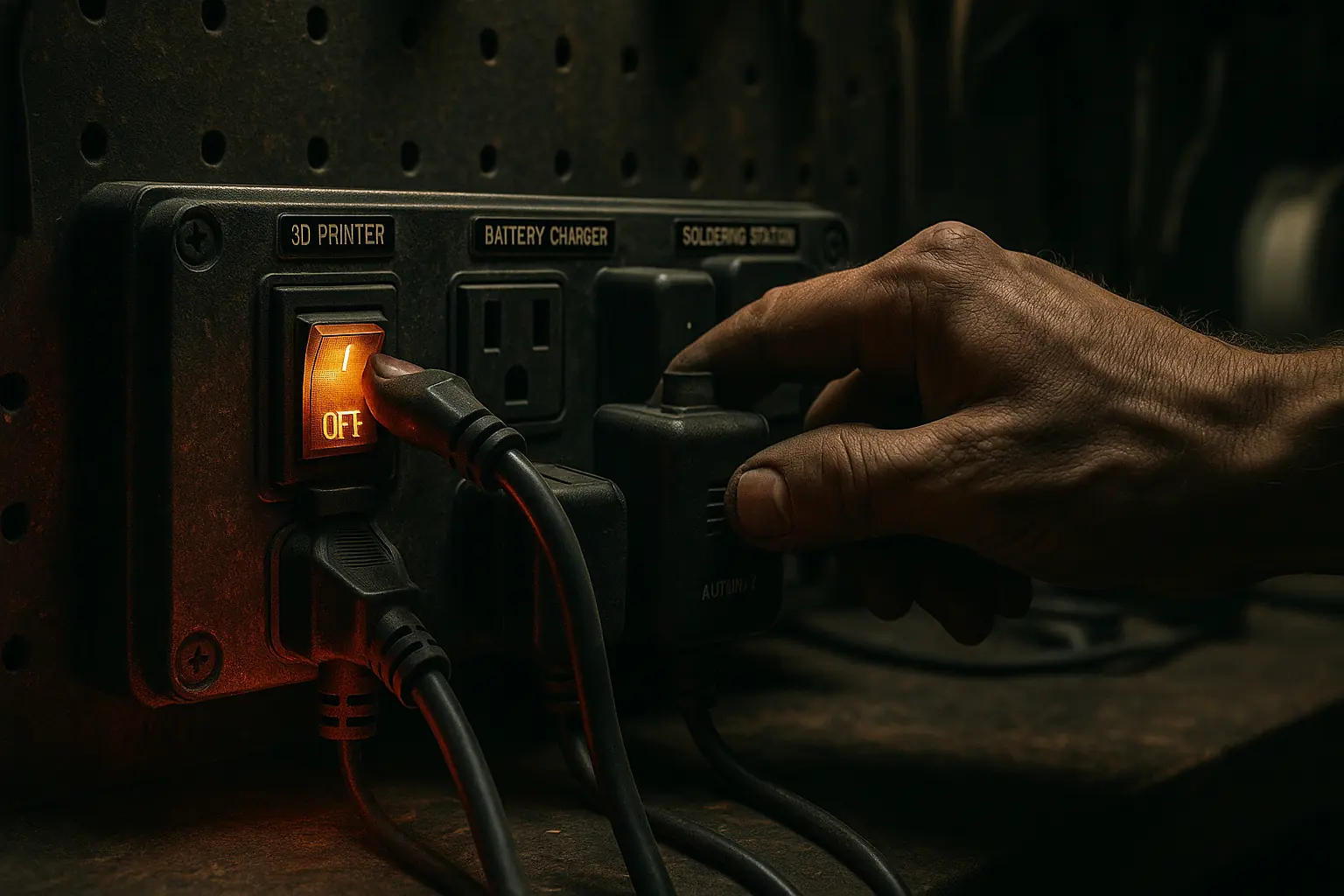
So, how does this energy drain happen? Anything with a clock continuously draws power. Remote controls do too. Devices in 'standby' mode consume energy around the clock. Consider your chargers. Your 3D printer is another culprit. Even some power strips themselves sip electricity. Makers frequently report surprising drops in their bills. They addressed this hidden consumption. One user shared their experience. They unplugged an always-on soldering station. Their 3D printer also went dark when unused. This simple habit shaved real dollars from their monthly bill. A true 'unspoken truth' of workshop economics emerged.
What's the simplest fix? Unplug your devices. This action is truly effective. For tools you use often, a switched power strip becomes your best ally. Flip one single switch. Everything connected goes completely dark. The benefits are immediate. You see tangible savings quickly.
Ready to hunt these energy vampires seriously? A simple kill-a-watt meter reveals all. This device precisely shows which tools draw power when 'off'. You identify the biggest offenders. This knowledge empowers you. Target those high-draw devices first.